Roller Pot Mill
The Roller Pot Mill is a high-efficiency laboratory and small-scale production grinding machine designed for uniform size reduction of materials. It uses rotating jars filled with grinding media to achieve fine, consistent particle size through impact, friction, and shear forces.

The Roller Pot Mill, also known as a jar rolling ball mill, is a precision grinding solution widely used in laboratories and pilot-scale production environments. It is engineered to deliver controlled, repeatable, and efficient size reduction of powders and granulated materials.
Accurate particle size control is a critical factor in powder processing, and this roller pot mill is designed to meet that requirement with high reliability. The system consists of rotating rollers that drive grinding jars at adjustable speeds. Inside the jars, grinding media and material interact continuously, resulting in uniform particle size reduction with minimal material loss.
Its versatile design allows grinding of a wide variety of materials, including dry powders, pharmaceutical compounds, ceramics, pigments, cosmetics, and specialty chemicals. The mill supports multiple jar materials and grinding media types, making it adaptable to different processing needs.
Built with durable components and safety-focused construction, the roller pot mill ensures long operational life even under continuous use. Easy maintenance, frequency-controlled speed regulation, and user-friendly operation make it suitable for both research laboratories and industrial applications.
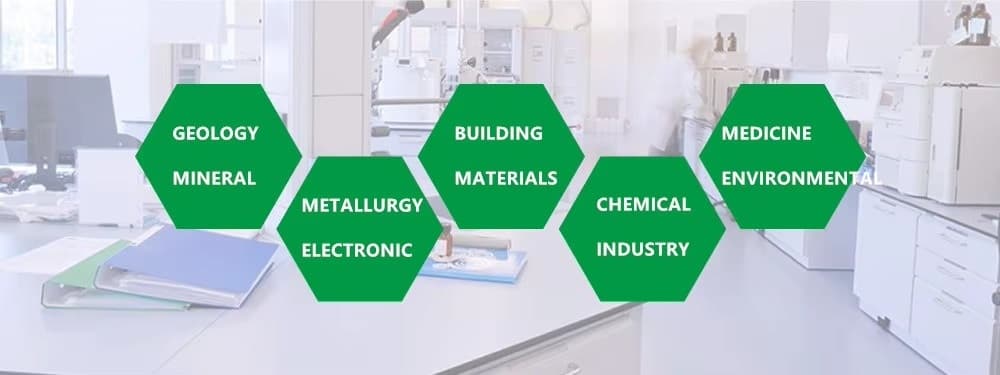
Applications of Roller Pot / Jar Milling Machine
- Pharmaceutical Industry:Grinding and homogenization of drug formulations, active ingredients, and excipients.
- Ceramics and Advanced Materials:Preparation of ceramic powders, glaze materials, and refractory components.
- Chemical Processing
- Size reduction and mixing of chemicals, pigments, and specialty compounds.
- Cosmetics Industry:Fine grinding of cosmetic powders and pigments for uniform texture.
- Metallurgy and Mineral Processing:Laboratory-scale grinding of ores, minerals, and metal powders.
- Battery and Energy Materials:Processing of electrode materials and functional powders.
- Research & Development Laboratories:Sample preparation for material characterization, testing, and formulation studies.
- Academic Institutions:Teaching and experimental research requiring controlled grinding operations.
Key Features of the Roller Pot Mill
- High grinding efficiency with minimal material loss
- Adjustable speed through frequency conversion control
- Suitable for dry and specialty materials
- Supports multiple jar sizes and materials
- Durable rollers with corrosion resistance
- Low maintenance design for continuous operation
- Safe and stable performance under heavy load
- Compact structure suitable for laboratory environments
Working Principle of the Pot Mill
- Jar Loading and Setup:The grinding process begins by loading the jar with the material to be processed along with suitable grinding media such as alumina, zirconia, agate, or hardened steel balls. To ensure effective grinding, the total load (material + grinding media) must not exceed 70% of the effective jar volume, allowing sufficient free movement of the media.
- Controlled Rotation of Jars:Once the mill is switched on, the rollers rotate at a preset speed controlled through a frequency conversion system. As the rollers rotate, they cause the jar to rotate uniformly around its horizontal axis.
- The rotational speed plays a crucial role in determining grinding efficiency. Lower speeds favor gentle grinding and mixing, while higher speeds increase impact energy for finer particle size reduction.
- Lifting and Falling Action of Grinding Media:
- As the jar rotates, the grinding media and material inside are carried upward along the inner wall of the jar due to friction between the jar surface and the contents. When the gravitational force exceeds the centrifugal force, the media and material fall back down.
- This repeated lifting and falling action creates strong impact forces, which break down the material particles.
- Grinding Mechanisms:Material size reduction occurs through a combination of:
- Impact force: When grinding balls fall onto the material
- Friction: Continuous rubbing between balls and particles
- Shear force: Rolling and sliding motion of grinding media
- These combined mechanisms ensure efficient, uniform, and controlled grinding.
- Continuous and Uniform Processing:Because the jar rotates continuously, the material is evenly exposed to grinding forces. This prevents uneven particle size distribution and ensures reproducible results throughout the batch.
- Completion of Grinding Process:After the desired grinding time is reached, the mill is stopped. The jar is removed, and the finely ground material is collected for further processing or analysis.
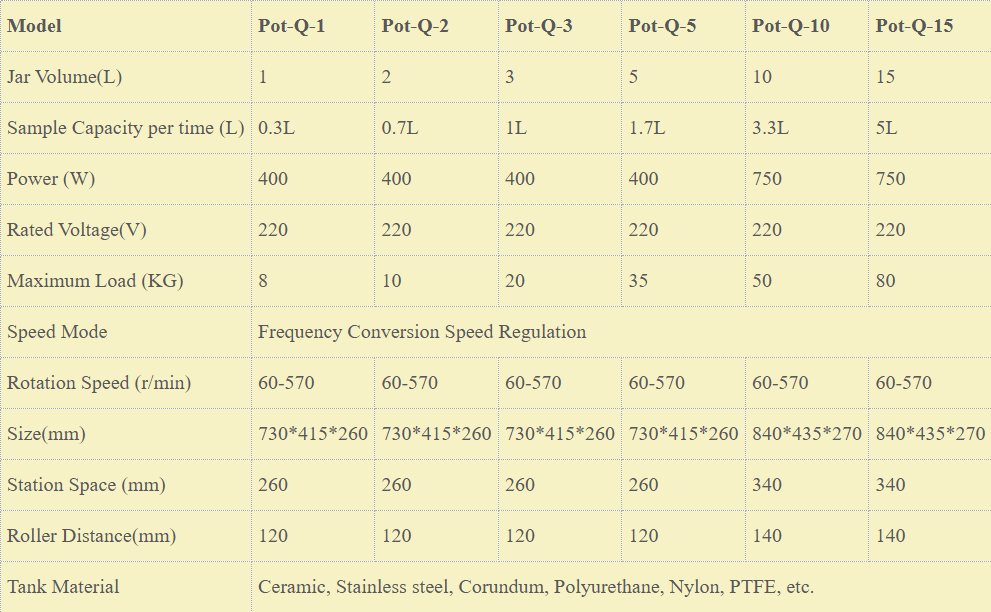
Technical Overview
Get Expert Guidance
- Contact us today for a free consultation. We will carefully assess your grinding requirements and recommend the most suitable roller pot mill configuration to optimize your production or research process.
- Unlock the full potential of fine grinding with confidence and control.