Atmosphere Furnace
A Controlled Atmosphere Furnace is an advanced, high-accuracy thermal processing unit developed for precise heat treatment in regulated gas conditions, ensuring uniform, oxidation-free, and contamination-free material processing for laboratory, educational, and industrial applications.
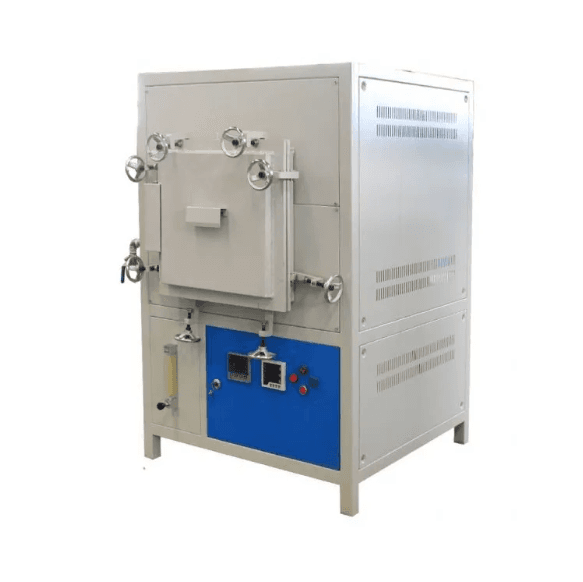
A Controlled Atmosphere Furnace is a high-precision thermal processing system designed for heat treatment under carefully regulated gaseous environments. These furnaces operate at temperatures ranging from 1100°C up to 1800°C and allow the use of vacuum, inert gases, or reactive gases to prevent oxidation and ensure uniform heating.
By isolating the heating chamber from ambient air, atmosphere furnaces enable consistent, contamination-free processing of materials that are sensitive to oxygen and moisture. They are widely used in laboratories, universities, and industrial facilities requiring accurate thermal control and repeatable results.
Why Controlled Atmosphere Heat Treatment Is Used
- When materials are exposed to air at high temperatures, oxidation and surface degradation can occur. A controlled atmosphere furnace eliminates this risk by introducing selected gases that create neutral, reducing, or reactive environments inside the chamber.
- This method ensures:
- Uniform heat distribution
- Clean surface finish without oxidation
- Improved mechanical and chemical properties
- Consistent and predictable heat treatment results
Applications of Controlled Atmosphere Furnaces
- Controlled atmosphere furnaces are used across a wide range of laboratory and industrial sectors:
- Heat treatment of steel and alloy components
- Aerospace and automotive part processing
- Universities and academic research laboratories
- Chemical and material science research
- Gemstone heat treatment
- Sintering and annealing processes
- Advanced ceramics and powder metallurgy
- Additive manufacturing and 3D-printed part sintering
- Solar cell and semiconductor material processing
Gaseous Atmospheres Supported
- These furnaces support a variety of gas environments depending on application requirements:
- Inert gases: Nitrogen, Argon
- Active gases: Hydrogen
- Process gases: Endothermic gas, exothermic gas
- Mixed atmospheres: Custom gas combinations in controlled proportions
How the Atmosphere Furnace Works
- The furnace consists of a thermally insulated heating chamber fitted with high-temperature heating elements and gas inlet/outlet systems. During operation:
- The chamber is evacuated or purged with selected gas
- The material is heated uniformly within the sealed environment
- The gas atmosphere protects the material from oxidation
- Precise temperature and gas flow controls ensure consistent results
Key Advantages of Atmosphere Furnaces
- High thermal efficiency and performance
- Excellent temperature uniformity
- Low energy consumption
- Precise PID-controlled heating
- Enhanced safety with multiple protection systems
- Reduced operational and labor costs
- Suitable for parts of all shapes and sizes
- Clean, oxidation-free surface finish
Technical Specifications (Overview)
- Temperature Options
- 1100°C (Continuous working: up to 1000°C)
- 1450°C (Continuous working: up to 1400°C)
- 1700°C (Continuous working: up to 1600°C)
- 1800°C (Continuous working: up to 1700°C)
- General Parameters
- Suggested heating rate: 10°C/min
- Power supply: AC 220V / 440V
- Power consumption: 4 kW – 10 kW (based on chamber size)
- Temperature accuracy: ±1°C
Furnace Construction
- Double-layer forced air cooling structure (external surface < 60°C)
- Compact, integrated design with precision-sealed furnace door
- Over-temperature, overload, and thermocouple protection
- Bias-temperature and rapid-program safety safeguards
- Silica-gel embedded sealing for airtight closure
- Multiple gas inlets with needle valves, flow meters, and vacuum ports
Control System
- Heating elements: MoSi₂ / SiC / Kanthal A-1
- Thermocouples: B-type / R-type with break protection
- PID automatic temperature control via SCR power regulation
- Programmable 30-segment time-temperature curves
- Pre-stored temperature programs (expandable)
Standard Accessories
- High-temperature crucible tongs
- Heat-resistant gloves
- Vacuum pump
- Pressure and gas connection pipes
- Silicone sealing rings
- User manual
Safety Guidelines
- Initial furnace baking at 250–400°C for 1 hour recommended
- Do not exceed rated temperature or ramp rates
- Avoid liquid or molten metal spills inside the chamber
- Always lock the door before vacuum operation
- Do not open the door above 400°C
- Operate under negative pressure vacuum only
- Gas pressure must not exceed 0.02 MPa
- Use controlled cool-down programs for high-temperature operation
Benefits of Using an Atmosphere Furnace
- Superior material quality and consistency
- Reduced oxidation and contamination
- High repeatability in heat-treatment processes
- Safe handling of inert and reactive gases
- Long service life with proper operation
Conclusion
- Controlled Atmosphere Furnaces are essential for laboratories and industries requiring precise, oxidation-free heat treatment at high temperatures. With advanced safety systems, accurate temperature control, and flexible gas atmosphere configurations, these furnaces deliver reliable performance for demanding thermal processes.